Memory Palace
记忆宫殿
展览信息
展览:记忆宫殿(The Memory Palace)& 记忆术(The Arts of Memory)
地点:华·美术馆 & OCAT深圳馆,深圳
展期:2021.9.29 – 2021.11.21(记忆宫殿)/ 2021.9.29 – 2021.11.11(记忆术)
策展人:胡斌、范白丁、郭伟其、方立华
展览总监:方谊翎
空间设计:URBANUS都市实践(王辉、王竞飞、朱榕涛、孙遇晴、李晓烨)
平面设计:王序
参展艺术家(完整名单):
OCAT深圳馆“记忆术”:顾德新、姜杰、蒋志、倪有鱼、彭祖强、尚扬、隋建国、宋冬、汪建伟、王广义、向京、严善錞、张晓刚、展望、曾浩、张培力
华·美术馆“记忆宫殿”:曹澍、陈萧伊、何采柔、李景湖、刘窗、刘唱、刘可、刘昕、佩恩恩、蒲英玮、沈凌昊、谭彬、王礼军、王叶子、姚明峰、易连、袁广、张文心、张移北

群展,华·美术馆,深圳
2021.9.29 – 2021.11.21
联合呈现:记忆术(OCAT深圳馆)与记忆宫殿(华·美术馆)
策展人:胡斌、范白丁、郭伟其、方立华
这是OCAT深圳馆与华·美术馆首次以双馆联动的方式呈现的大型群展,由“记忆术”(The Arts of Memory)与“记忆宫殿”(The Memory Palace)两个相互呼应的展览共同构成,邀请了三十位艺术家的四十组作品参展。展览旨在探讨艺术家如何将记忆进行艺术实践的转换,回应艺术史学者、OCAT创始人黄专关于“记忆是人思考时间的核心”的命题。
策展理念:记忆的双重路径
“记忆术”与“记忆宫殿”源自同一古典传统——古希腊罗马的修辞学训练,将需要记忆的事物转化为图像,按一定秩序存储于想象中的建筑体内。两个展览以此为起点,却走向不同的方向:
OCAT深圳馆“记忆术”以“记忆与遗忘”为引子,通过“载体与物性”“地点与风景”“剧场与系统”三个部分形成有机结构,探讨记忆与艺术的互文关系。展览邀请了16位艺术家的26组作品参展。策展人阐释道:“记忆术”指代记忆的艺术,即记忆与艺术的关系。被记忆的事物可能因个体、集体、文化情境等因素的影响而变化,产生新的意义——因此记忆本身就蕴含着创造性的力量。
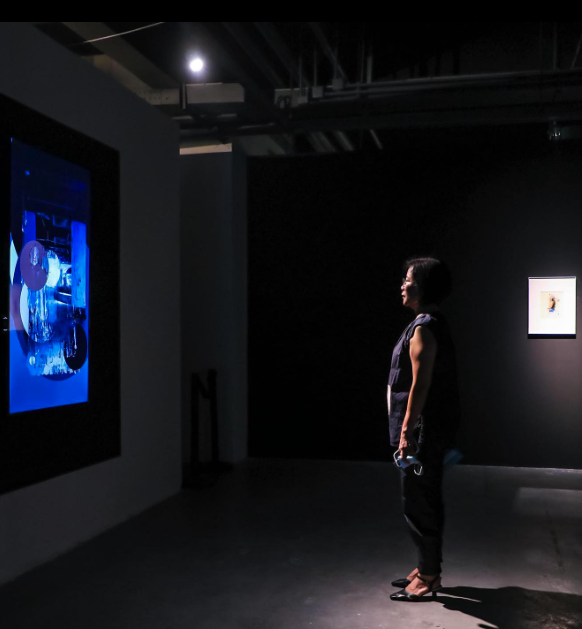
华·美术馆“记忆宫殿”则由“语法”“形迹”“景观”“远境”四个相互关联的部分构成,邀请了14位艺术家的14组作品参展。展览通过艺术家的艺术实践和特别的空间构造,让包含地点、秩序、空间和图像等概念的“记忆宫殿”,成为面向知识与秩序的视觉实验。人们行走其间,借助作品与展场的空间关系,串联起记忆的线索,建构自身的艺术记忆。
策展团队在阐释中引述黄专的《记忆的迷宫》:“记忆是人思考时间的核心……时间不再仅仅是度量世界的物理尺度,记忆也不再仅仅是获取过去的想象空间,‘现在’或‘当下’而不是‘过去’和‘未来’成为思考时间和记忆的起点,它意味着过去和未来只有在当下的思考中才具有意义。”
空间设计:记忆的编码与解码
两个展览特别邀请了建筑师王辉(URBANUS都市实践)进行空间设计,设计师王序负责视觉设计。空间本身成为对“记忆术”的回应——如何用空间叙事来组织艺术家的群展作品。
“记忆宫殿”的设计利用了华·美术馆的三层空间:将同一艺术家的作品分解为三部分内容——作为实物的艺术品、艺术家介绍、作品介绍,用有鲜明几何特征的空间来储存这三重展示。一层圆形墙(因应沈凌昊作品的圆形空间需求)、二层横墙、三层纵墙,构成垂直方向上的“记忆坐标”。40公分高的墙根贯穿三层,既是展墙基础,也是可供观众坐下的长凳——随时可以停下来,静观,或追忆。
“记忆术”的设计则以“影子”为切入点。设计师利用前一个展览留下的石膏板盒子,通过在地面与墙体上“画影子”,让影子成为物体与场所的关联,激发观者对其来源的思考。柏拉图理念论在此被引入——现实世界只是“理念世界”的影子,而记忆是通往真理的途径。展厅中,汪建伟的作品立于白盒子影子的上方,展览灯光投射的影子与外加设计的“影子”重叠交错,试图扩大观者的空间记忆以回应策展命题。
这两个展览的设计,也被视为对已故的黄专老师的纪念——其夫人白榆老师手写的黄老师语录在空间中若隐若现,为叙事增加了一个隐秘的向度。
参展作品(部分)
OCAT深圳馆“记忆术”
展览以张晓刚创作于1980年代末的作品《忘川》作为开篇。古希腊传说中人离世后需要去往“忘川”洗尽人间记忆,才能进入另一个世界——这件作品为整个展览铺设了“记忆与遗忘”的基调。
汪建伟的《总是,不是全部No.6》(2020)立于影子之上,探讨记忆的不确定性与重构。
王广义为纪念黄专创作的三联画《记忆的轮廓》(2021)在展览中引发强烈回响,拉开不少人记忆的闸门。
展望的《假山石178#》(2007-2019)在地面增加了投影,像一潭湖水,呼应1999年与黄专合作的《鱼戏浮石》——当年艺术家用不锈钢板拓制石头使其漂在水上,原石则沉在湖底。
严善錞的《宝石山拟古(一)》(2017)延续了他与黄专合作研究董其昌时期的方法论,将“情景逻辑”运用于当代绘画。
其他参展艺术家还包括:顾德新、姜杰、蒋志、倪有鱼、彭祖强、尚扬、隋建国、宋冬、王光乐、向京、张培力、曾浩、展望、郑国谷等。
华·美术馆“记忆宫殿”
沈凌昊的《梦的句子》(2020)截取日记中不同时期对梦境的日常记录,通过感光材料转印于环形墙面。随着UV光的移动,文字慢慢出现又逐渐消失,就像人在睡梦中的记忆,介于真实与虚幻之间。展厅中央的环形墙设计便因应这件作品的需求而激发成形。
王礼军的《童话》用粉笔涂抹农村老家的摄影,沿着照片中房子的空间动线,动用透视手法使之溢出画面,形成富有童真和视觉冲击力的粉笔墙。这件作品被安置于二层最长的横墙上,充分发挥其视觉张力。
张文心的《瀛海威2020》探讨当代社会如何跨越国界进行记忆的交互。
刘昕的《地面站》探索如何通过宇宙卫星寻找记忆。
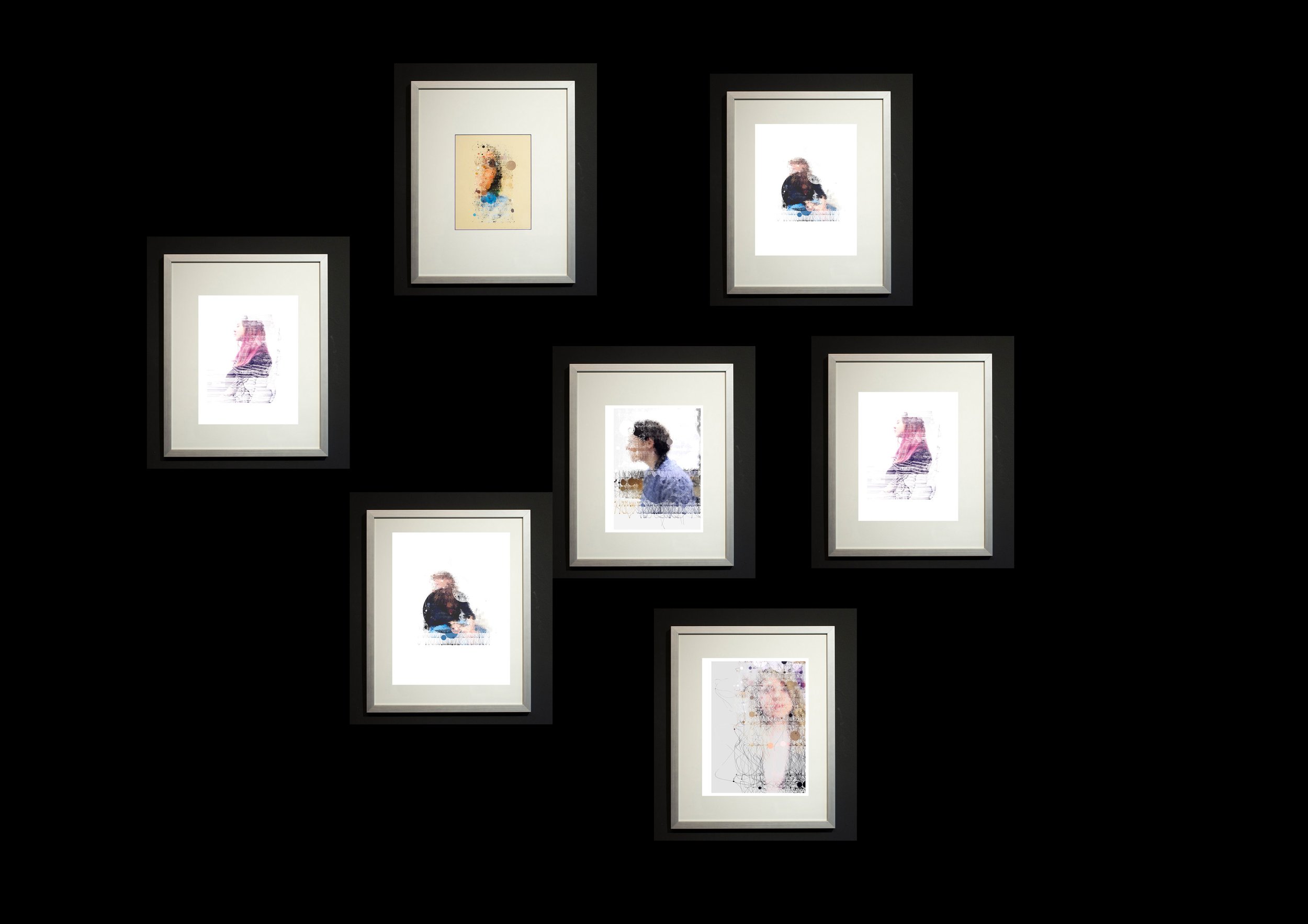
刘唱的《随机漫步者-墨》(2016)以机器和算法保留记忆的痕迹。当观众走入空间,摄像头捕捉其身影,内置算法实时描绘出一幅抽象肖像。与传统肖像画中被动静默的模特不同,在这里,观众成为与算法共同创作的合作者。当你离开,屏幕上留下的痕迹会慢慢模糊、消散,很快被下一位参与者替代。没有一张肖像被永久保存,每一次观看都是一次无法复制的发生——这本身,就是对“记忆”本质的提问:什么是被记住的?什么被遗忘?当机器开始拥有记忆,人的记忆又意味着什么?
其他参展艺术家还包括:曹澍、陈萧伊、何采柔、李景湖、刘窗、刘可、佩恩恩、蒲英玮、谭彬、王叶子、姚明峰、易连、袁广、张移北等。
现场回响
《艺术新闻》在深度报道中指出,在黄专逝世五周年这一时间维度上,两个展览“在认识论和方法论的层面上聚焦艺术家如何将记忆视觉进行转译,在当前的社会语境中去思考用艺术的手法处理记忆的可能,以一种学术研究维度形成记忆黄专的另一种内在书写”。
策展人之一、OCAT深圳馆副馆长方立华在接受采访时表示:“艺术家不像利玛窦那样带来训练记忆的‘记忆术’,但艺术家借助艺术描绘和建构记忆,从而建立起艺术与记忆的世界。”
媒体评论指出:“三十位艺术家的创作,在两个相呼应的场域间形成关于‘记忆’的共鸣。内在于作品的艺术家记忆与观者的目光碰撞出当下的思考,完成了个体记忆间的流转,透过艺术,激起新的记忆体验。”
公共教育活动
展览期间,两馆举办了数场公共项目活动,包括策展人导览、艺术家对谈、主题工作坊等,与公众共同探索记忆与艺术更多的讨论空间。在华·美术馆二层,还专门开设了阅读角,提供与记忆相关的研究资料给观者延伸阅读和思考。
展览信息
展览:记忆宫殿(The Memory Palace)& 记忆术(The Arts of Memory)
地点:华·美术馆 & OCAT深圳馆,深圳
展期:2021.9.29 – 2021.11.21(记忆宫殿)/ 2021.9.29 – 2021.11.11(记忆术)
策展人:胡斌、范白丁、郭伟其、方立华
展览总监:方谊翎
空间设计:URBANUS都市实践(王辉、王竞飞、朱榕涛、孙遇晴、李晓烨)
平面设计:王序
参展艺术家(完整名单):
OCAT深圳馆“记忆术”:顾德新、姜杰、蒋志、倪有鱼、彭祖强、尚扬、隋建国、宋冬、汪建伟、王广义、向京、严善錞、张晓刚、展望、曾浩、张培力
华·美术馆“记忆宫殿”:曹澍、陈萧伊、何采柔、李景湖、刘窗、刘唱、刘可、刘昕、佩恩恩、蒲英玮、沈凌昊、谭彬、王礼军、王叶子、姚明峰、易连、袁广、张文心、张移北
关联项目
同期还呈现了展览“李怒:诞生”,在OCAT工作室A/B展出,呈现艺术家李怒在深圳短暂驻地形成的特别项目。
Memory Palace
Group Exhibition, Hua Museum & OCAT Shenzhen, Shenzhen
September 29 – November 21, 2021
Co-presentation: The Arts of Memory (OCAT Shenzhen) and The Memory Palace (Hua Museum)
Curators: Hu Bin, Fan Baiding, Guo Weiqi, Fang Lihua
This large-scale group exhibition marked the first collaboration between OCAT Shenzhen and Hua Museum, presenting two interconnected exhibitions—The Arts of Memory and The Memory Palace—featuring forty works by thirty artists. The project explored how artists transform memory through artistic practice, responding to art historian and OCAT founder Huang Zhuan's proposition that "memory is the core of human thinking about time."
Curatorial Vision: Two Paths of Memory
The Arts of Memory and The Memory Palace originate from the same classical tradition—ancient Greco-Roman rhetoric training, where things to be remembered were converted into images and stored in a specific order within an imagined architectural structure. Taking this as their starting point, the two exhibitions diverged in different directions:
OCAT Shenzhen's The Arts of Memory took "memory and forgetting" as its point of departure, forming an organic structure through three sections: "Carrier and Materiality," "Place and Landscape," and "Theater and System." The exhibition explored the intertextual relationship between memory and art, featuring 26 works by 16 artists. The curators explained: "The arts of memory" refers to the art of memory itself—the relationship between memory and art. What is remembered may transform under the influence of individual, collective, and cultural contexts, generating new meanings—thus memory itself contains creative power.
Hua Museum's The Memory Palace was structured through four interconnected sections: "Grammar," "Traces," "Landscape," and "Distant Realm," presenting 14 works by 14 artists. Through artistic practice and specially constructed spatial relationships, the exhibition transformed the concept of "memory palace"—with its implications of place, order, space, and image—into a visual experiment oriented toward knowledge and order. Visitors moving through the space could trace threads of memory and construct their own artistic memories through the spatial relationships between works and exhibition spaces.
The curatorial team cited Huang Zhuan's "Labyrinth of Memory" in their statement: "Memory is the core of human thinking about time... Time is no longer merely a physical scale for measuring the world, nor is memory merely an imaginative space for accessing the past. 'Now' or 'the present,' rather than 'past' or 'future,' becomes the starting point for thinking about time and memory. It means that past and future only acquire meaning through present contemplation."
Spatial Design: Encoding and Decoding Memory
Both exhibitions specially invited architect Wang Hui (URBANUS) for spatial design and Wang Xu for visual design. The space itself became a response to "the arts of memory"—how to organize a group exhibition through spatial narrative.
The design of The Memory Palace utilized Hua Museum's three floors: each artist's work was decomposed into three components—the artwork itself, artist introduction, and work description—stored within distinct geometric spaces. The first floor's circular wall (responding to Shen Linghao's work requiring circular space), the second floor's horizontal walls, and the third floor's vertical walls formed a vertical "memory coordinate." Forty-centimeter-high wall bases ran through all three floors, serving both as exhibition foundations and benches for visitors, inviting pauses for contemplation or recollection.
The design of The Arts of Memory took "shadow" as its focal point. Using plasterboard boxes left from the previous exhibition, the designer "drew shadows" on floors and walls, making shadow a connection between object and place, inspire viewers'thinking about origins. Platonic theory was introduced—the physical world as a shadow of the "world of ideas," with memory as the path to truth. In the exhibition hall, Wang Jianwei's work stood above the shadow of a white box; shadows cast by exhibition lighting overlapped with designed "shadows," seeking to expand viewers' spatial memory in response to the curatorial proposition.
The design of both exhibitions was also seen as a memorial to the late Huang Zhuan—handwritten quotes by him, written by his wife Bai Yu, appeared subtly throughout the spaces, adding a hidden dimension to the narrative.
Selected Works
OCAT Shenzhen: The Arts of Memory
The exhibition opened with Zhang Xiaogang's late-1980s work Lethe. In ancient Greek legend, the dead must drink from the river Lethe to wash away earthly memories before entering another world—this work established the "memory and forgetting" tone for the entire exhibition.
Wang Jianwei's Always, Not All No.6 (2020) stood upon shadows, exploring the uncertainty and reconstruction of memory.
Wang Guangyi's triptych Outline of Memory (2021), created in memory of Huang Zhuan, resonated deeply with viewers, opening many personal memory doors.
Zhan Wang's Artificial Rock 178# (2007-2019) added projections on the ground like a lake, echoing Fish Playing with Floating Stone created with Huang Zhuan in 1999—where the artist used stainless steel plates to replicate stones floating on water, while the original stone rested at the lake bottom.
Yan Shanchun's Gemstone Hills in the Manner of the Ancients (I) (2017) continued the methodology from his collaborative research with Huang Zhuan on Dong Qichang, applying "situational logic" to contemporary painting.
Other participating artists included: Gu Dexin, Jiang Jie, Jiang Zhi, Ni Youyu, Peng Zuqiang, Shang Yang, Sui Jianguo, Song Dong, Wang Guangle, Xiang Jing, Zhang Peili, Zeng Hao, Zhan Wang, Zheng Guogu.
Hua Museum: The Memory Palace
Shen Linghao's Dream Sentences (2020) excerpted daily dream records from different periods, transferred onto circular walls through photosensitive materials. As UV light moved,文字 slowly appeared and disappeared, like sleeping memories hovering between reality and illusion. The circular wall design was inspired by and shaped for this work.
Wang Lijun's Fairy Tale applied chalk over photographs of his rural hometown, extending beyond the frame along the spatial lines of the photographed houses, creating chalk walls rich in childlike wonder and visual冲击力. The work was positioned on the second floor's longest horizontal wall, maximizing its visual tension.
Zhang Wenxin's YHWH 2020 explored how contemporary society navigates memory across borders.
Liu Xin's Ground Station investigated memory retrieval through space satellites.
Liu Chang's Random Walker – Dripping (2016) preserved memory traces through machine and algorithm. When viewers entered the space, a camera captured their presence as an algorithm rendered abstract portraits in real time. Unlike traditional portraiture where the sitter remains passive, here viewers co-created with the algorithm. When they departed, traces slowly blurred and faded, soon replaced by the next presence. No portrait was saved. Each viewing was unrepeatable—a questioning of memory's essence: What is remembered? What is forgotten? When machines begin to possess memory, what do human memories mean?
Other participating artists included: Cao Shu, Chen Xiaoyi, Ho Tsai-jou, Li Jinghu, Liu Chuang, Liu Ke, Pei Enen, Pu Yingwei, Tan Bin, Wang Yezi, Yao Mingfeng, Yi Lian, Yuan Guang, Zhang Yibei.
Critical Response
The Art Newspaper noted in its in-depth coverage that, five years after Huang Zhuan's passing, the two exhibitions "focus on how artists translate memory visually at epistemological and methodological levels, contemplating the possibilities of handling memory through artistic means in current social contexts, forming another internal writing in memory of Huang Zhuan through academic research dimensions."
Curator Fang Lihua, Deputy Director of OCAT Shenzhen, stated in an interview: "Artists don't bring 'arts of memory' for training memory like Matteo Ricci. But through art, artists depict and construct memory, thereby establishing a world of art and memory."
Media commentary observed: "The creations of thirty artists form resonances about 'memory' across two echoing spaces. Artist memories within works collide with viewers' gazes, generating present contemplation, completing the flow between individual memories, and provoking new memory experiences through art."
Public Programs
During the exhibition, both institutions hosted public programs including curator-led tours, artist talks, and thematic workshops, exploring further discussions on memory and art with the public. A reading corner on Hua Museum's second floor provided research materials on memory for extended contemplation.
Exhibition Information
Exhibition: Memory Palace & The Arts of Memory
Venues: Hua Museum & OCAT Shenzhen, Shenzhen
Duration: September 29 – November 21, 2021 (Memory Palace) / September 29 – November 11, 2021 (The Arts of Memory)
Curators: Hu Bin, Fan Baiding, Guo Weiqi, Fang Lihua
Exhibition Director: Fang Yiling
Spatial Design: URBANUS (Wang Hui, Wang Jingfei, Zhu Rongtao, Sun Yuqing, Li Xiaoye)
Graphic Design: Wang Xu
Participating Artists:
OCAT Shenzhen "The Arts of Memory": Gu Dexin, Jiang Jie, Jiang Zhi, Ni Youyu, Peng Zuqiang, Shang Yang, Sui Jianguo, Song Dong, Wang Jianwei, Wang Guangyi, Xiang Jing, Yan Shanchun, Zhang Xiaogang, Zhan Wang, Zeng Hao, Zhang Peili
Hua Museum "Memory Palace": Cao Shu, Chen Xiao Yi, Ho Tsai-jou, Li Jinghu, Liu Chuang, Liu Chang, Liu Ke, Liu Xin, Pei Enen, Pu Yingwei, Shen Linghao, Tan Bin, Wang Lijun, Wang Yezi, Yao Mingfeng, Yi Lian, Yuan Guang, Zhang Wenxin, Zhang Yibei
Related Projects
The exhibition period also featured "Li Nu: Genesis" at OCAT Studios A/B, presenting artist Li Nu's special project developed during a brief residency in Shenzhen.