Artist Residency:
CATWALK INSTITUTE
艺术家驻留项目:
将驻留作为方法的日常记录
Artist in Residency
Catwalk/Catslair Residency Program in Catskill, New York
-
驻地作为一种方法:
Catwalk / Catslair 驻地档案
艺术家:刘唱
驻地项目:Catwalk Institute / Catslair Residency Program
地点:纽约州卡茨基尔(Catskill, New York)
时间:2017 年 5-6 月
驻地语境:哈德逊河畔的创作庇护所
卡茨基尔,哈德逊河谷。这片土地本身就是一个关于“创作”的故事。
19世纪,哈德逊河画派的艺术家们在这里找到了美国艺术的原创语言——那些绿色的山丘、河面的光影、小镇的静谧,被转化为画布上的辽阔与深邃。托马斯·科尔的故居与工作室就在Catwalk驻地几步之遥;弗雷德里克·丘奇受波斯启发的宅邸奥拉纳(Olana)隔河相望。
2002年,吉姆和珀塞尔·帕尔默(Jim and Purcell Palmer)在这片土地上创立了Catwalk私人驻地项目。珀塞尔·帕尔默居住在1864年由哈德逊河画派艺术家、学者查尔斯·赫伯特·摩尔(Charles Herbert Moore)设计并建造的修复住宅中。与驻地主持人的互动,成为Catwalk传统的一部分。
此后,Catwalk进一步收购了1980年代的住宅综合体Catslair,为艺术家、作家、学者提供更长时段的驻留机会,聚焦“地点、风景与环境”的主题,探索植根于风景与生态中的自然本质。 Catwalk的精神:低技术,高浓度
Catwalk不是一个提供技术支持的“创作工厂”。它被明确描述为一个“低技术”的驻留环境——没有传统的表演空间或舞蹈工作室,没有繁复的设备,只有70英亩的土地、哈德逊河的视野、以及被历史浸润的空气。
但“低技术”恰恰是其核心价值。它迫使创作回归到最基本的状态:与自己相处,与土地相处,与时间相处。驻留者被鼓励充分利用这片土地,探索卡茨基尔和哈德逊地区——那些历史遗址、艺术家聚落、以及仍在生长的当代艺术现场(Art Omi、Dia:Beacon、Storm King、Opus 40)。
特别鼓励的项目类型是:与地区产生连接的合作项目,或特定场域的创作。这不是一个可以随身携带的驻地,而是一个需要被“进入”的语境——进入这片土地的历史、生态和氛围。 与Tisch的联结:从驻地到社群
2015年春,纽约大学Tisch艺术学院的创意研究计划(Tisch Initiative for Creative Research)与Catwalk Institute建立了合作伙伴关系。自此,Catwalk向Tisch的校友、教师和员工开放申请,每年由Tisch的Catwalk校友组成的评审团进行选拔。
这一合作让Catwalk成为一个跨代际、跨学科的社群容器。申请者需要清晰地描述:
- 创作项目与当前进程
- 希望在驻留期间达成的目标
- 项目如何与哈德逊河谷的历史、文化、生态产生关联
- 是否有来自该地区的具体灵感来源
- 项目在驻留后可能对该地区产生的影响
- 是否需要公共展示环节(朗读会、圆桌讨论、非正式呈现等)
关于刘唱在Catwalk的驻留经历,目前公开的档案中尚未留下具体的作品记录。但我们可以从已知的信息中,勾勒出这次驻留的可能轮廓:
卡茨基尔,对于一位长期探讨“自然与算法”关系的艺术家而言,是一个意味深长的坐标。哈德逊河画派曾在这里追问:什么是美国的自然?如何用绘画捕捉光的流动、山的气息?一百多年后,一位用代码“绘画”的艺术家来到这里——她面对的同样是“自然”,但手中的工具已经从画笔变成了算法。
Catslair对驻留者的期待是明确的:探索“地点、风景与环境”的主题,研究植根于风景与生态中的自然本质。这与刘唱持续进行的《自然的时序》《自然与算法》等项目形成深层呼应。在哈德逊河谷的70英亩土地上,她是否曾让算法与这片土地对话?是否曾将河面的光、山丘的曲线、季节的流转,转化为像素的呼吸?
这些问题的答案,或许藏在尚未公开的作品中,或许藏在那段未被记录的驻留时间里。 Catwalk的持续回响
Catwalk不是一个关于“产出”的驻地。它更像一个容器——容纳那些需要时间、空间、寂静才能生长的想法。
历届驻留者的后续轨迹证明了这一点:黄若(2023)的歌剧《美猴王》在旧金山歌剧院全球首演;作曲家兼吉他手Jacinta Clusellas(2019)的项目AZUL持续发展;剧作家A.A. Brenner(2022)的作品在纽约皇后剧院和Brick Theater上演;画家Tyson Reeder(2018)的作品在首尔展出;声音与装置艺术家Kamari Carter(2020)在布鲁克林Microscope Gallery举办个展。
E.B. Bartels在Catwalk的阁楼里写下了《Good Grief》的前几章,这本书后来由HarperCollins出版。她将那次驻留称为“这本书开始的地方”。 项目信息
艺术家:刘唱
驻地项目:Catwalk Institute / Catslair Residency Program
地点:纽约州卡茨基尔(Catskill, New York)
合作伙伴:纽约大学Tisch艺术学院
主题聚焦:地点、风景、环境、自然与生态
Catwalk Institute由詹姆斯和珀塞尔·帕尔默于2002年创立,是一个私人运营的艺术家驻地项目。2014年正式注册为501(c)(3)非营利组织。驻地位于哈德逊河畔70英亩的历史遗址上,与奥拉纳隔河相望,毗邻托马斯·科尔国家历史遗址。

Residency as Method: Catwalk / Catslair Residency ArchiveArtist: Liu Chang
Residency Program: Catwalk Institute / Catslair Residency Program
Location: Catskill, New York
Date: 2017 May to JuneThe Residency Context: A Creative Sanctuary on the Hudson
Catskill, Hudson Valley. This land itself is a story about "creation."
In the 19th century, artists of the Hudson River School found here the original language of American art—those green hills, the light on the river, the stillness of small towns, transformed into the vastness and depth on canvas. Thomas Cole's home and studio are just steps away from the Catwalk residency; Frederic Church's Persian-inspired estate Olana stands across the river.
In 2002, Jim and Purcell Palmer founded the Catwalk private residency program on this land. Purcell Palmer resides in the restored home designed and built in 1864 by Hudson River School artist and scholar Charles Herbert Moore. Interaction with the host during the residency period has become part of Catwalk's tradition.
Subsequently, Catwalk acquired Catslair, a 1980s residential complex, offering longer-term residencies for artists, writers, and scholars exploring themes of "place, landscape, and environment," investigating universal aspects of nature embedded in landscape and ecology. The Spirit of Catwalk: Low-Tech, High-Density
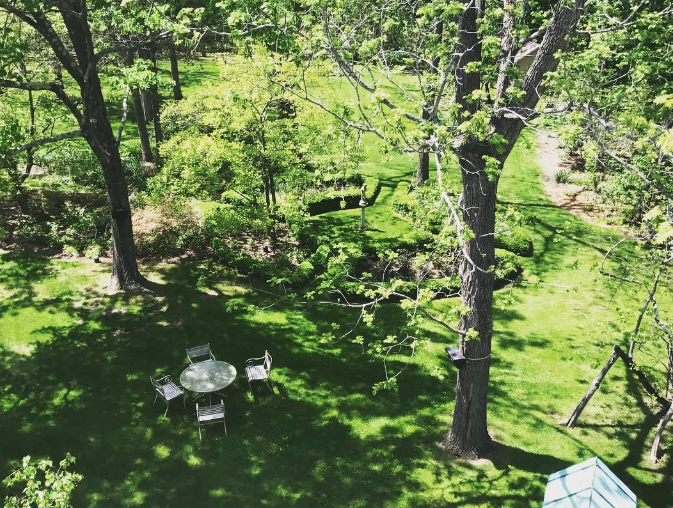
Catwalk is not a "production factory" offering technical support. It is explicitly described as a "low-tech" residency environment—no traditional performance spaces or dance studios, no elaborate equipment, only 70 acres of land, the view of the Hudson River, and air steeped in history.
But "low-tech" is precisely its core value. It forces creation back to its most basic state: being with oneself, being with the land, being with time. Residents are encouraged to fully utilize the land, explore the Catskill and Hudson region—those historic sites, artist colonies, and the still-growing contemporary art scenes (Art Omi, Dia:Beacon, Storm King, Opus 40).
Particularly encouraged are collaborative projects that connect with the region, or site-specific creations. This is not a portable residency; it is a context that needs to be "entered"—entered into the history, ecology, and atmosphere of this land. Connection with Tisch: From Residency to Community
In the spring of 2015, NYU Tisch School of the Arts' Tisch Initiative for Creative Research established a partnership with Catwalk Institute. Since then, Catwalk has opened applications to Tisch alumni, faculty, and staff, with selections made annually by a jury composed of Tisch Catwalk alumni.
This collaboration has made Catwalk a container for cross-generational, interdisciplinary community. Applicants need to clearly describe:
- Their creative project and current progress
- Goals hoped to achieve during the residency
- How the project relates to the history, culture, and ecology of the Hudson Valley
- Whether there are specific sources of inspiration from the region
- The project's potential impact on the region after the residency
- Whether a public presentation component is needed (readings, roundtable discussions, informal presentations, etc.)
Regarding Liu Chang's residency experience at Catwalk, no specific records of her work remain in publicly available archives. But from what is known, we can sketch the possible contours of this residency:
For an artist who has long explored the relationship between "nature and algorithm," Catskill is a significant coordinate. The Hudson River School once asked here: What is American nature? How to capture the flow of light, the breath of mountains with paint? Over a century later, an artist who "paints" with code arrives here—she faces the same "nature," but the tool in her hand has evolved from brush to algorithm.
Catslair's expectation for residents is clear: explore themes of "place, landscape, and environment," investigate the universal essence of nature embedded in landscape and ecology. This deeply resonates with Liu Chang's ongoing projects like The Flow of Nature and Nature and Algorithm. On the 70 acres of Hudson Valley land, did she ever let the algorithm converse with this terrain? Did she ever translate the light on the river, the curves of the hills, the rhythm of seasons into the breath of pixels?
The answers to these questions may lie in yet-unpublished work, or perhaps in that undocumented period of residency time. The Continuing Resonance of Catwalk
Catwalk is not a residency focused on "output." It is more like a vessel—containing ideas that need time, space, and silence to grow.
The subsequent trajectories of past residents prove this: Huang Ruo (2023)'s opera Monkey King premiered globally at San Francisco Opera; composer and guitarist Jacinta Clusellas (2019)'s project AZUL continues to develop; playwright A.A. Brenner (2022)'s works were staged at Queens Theater and The Brick Theater in New York; painter Tyson Reeder (2018)'s work was exhibited in Seoul; sound and installation artist Kamari Carter (2020) held a solo exhibition at Microscope Gallery in Brooklyn.
E.B. Bartels wrote the first chapters of Good Grief in the attic at Catwalk, a book later published by HarperCollins. She called that residency "where this book began." Project Information
Artist: Liu Chang
Residency Program: Catwalk Institute / Catslair Residency Program
Location: Catskill, New York
Partner Institution: NYU Tisch School of the Arts
Thematic Focus: Place, landscape, environment, nature, and ecology
Catwalk Institute was founded in 2002 by James and Purcell Palmer as a privately operated artist residency program. It was officially registered as a 501(c)(3) nonprofit organization in 2014. The residency is located on 70 acres of historic land along the Hudson River, across from Olana and adjacent to the Thomas Cole National Historic Site.